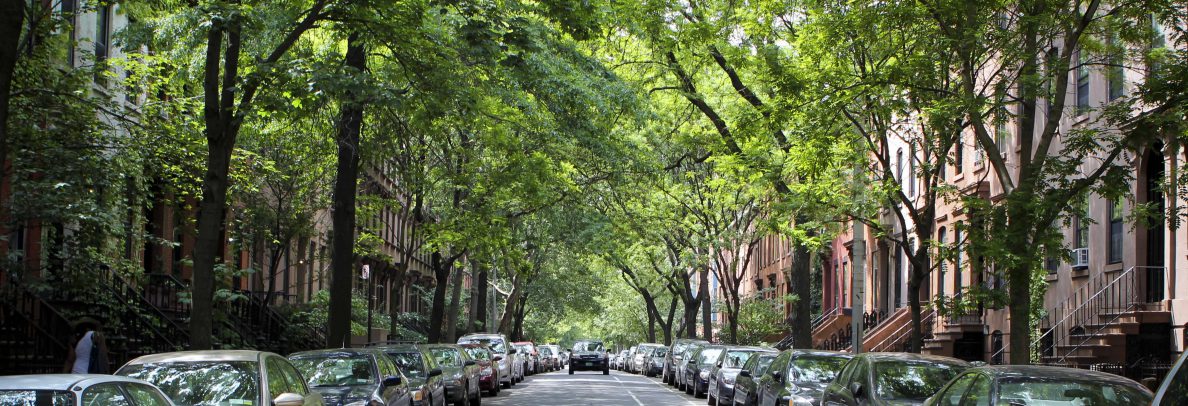
Combining data from 8,919 large cities globally, a study highlights the extent to which trees cool cities — and the urgent need to green vulnerable neighbourhoods
来源 The Nature Conservancy(原稿全文)作者 TNC Newsroom日期 原发 2026-05-05难度 较高
【1】The world's 'urban heat islands' (UHIs) would be twice as hot without the cooling effect trees have on superheated cityscapes, according to an unprecedented study that also highlights stark inequalities in access to this powerful form of nature-based air conditioning.
【2】Led by The Nature Conservancy (TNC) and published in Nature Communications, the paper pools data from nearly 9,000 large cities worldwide – collectively home to ~3.6 billion people – to find that tree cover currently mitigates nearly half (~48.6%) of the UHI effect that occurs when man-made surfaces like roads, buildings and car parks absorb and release heat from the sun, causing urban areas to heat up more than surrounding rural regions.
【3】Over 200 million city-dwellers globally, the study finds, have trees to thank for ambient air temperatures more than 0.5°C lower than would otherwise be the case in their neighbourhoods – a highly significant contrast when extrapolated across the thousands of cities, billions of citizens and increasingly life-threatening temperatures concerned.
【4】Commenting on the study's significance, Rob McDonald, TNC's lead global scientist for both nature-based solutions and for its European regional team, said, "By combining datasets showing air temperatures at 1km scale with high-resolution land cover maps, we've succeeded for the first time in producing tangible estimates for a natural cooling effect that's long been accepted but never comprehensively measured until now."
【5】Co-authored by scientists from Pacific Northwest National Laboratory (PNNL), SUNY ESF and Western Sydney University, the study also finds that the cooling effect of trees is currently concentrated in places where the need is less acute: high-income countries, humid climates and suburban neighbourhoods.
【6】Compounding this inequality is the study's projection that current and future tree cover will only be able to mitigate 9-10% of the increase in temperatures caused by climate change that is anticipated by 2050.The maximum possible tree planting scenario increases this to around 20%, making it doubly urgent that governments commit to increasing tree canopy cover across their most densely settled and low-income urban areas while there's still time to allow full canopy growth.
【7】Adding further urgency, Rob McDonald said, "While expanding tree cover – particularly in urban areas that don't have enough right now – is an essential part of adapting to rising temperatures, our study suggests that trees by themselves won't be enough.Humanity will need to use multiple strategies to adapt to a hotter world, and we desperately need to reduce greenhouse gas pollution to avoid committing ourselves to catastrophically high temperatures."
【8】TC Chakraborty, Earth Scientist at PNNL, who led the remote sensing analysis for the study, said: "Most global studies rely on satellite land surface temperature, which significantly overstates the cooling benefits of trees.But air temperature alone doesn't tell the whole story.By modeling Wet Bulb Globe Temperature – a metric that also factors in humidity, wind, and solar radiation – at the local scale for a small subset of cities, we found that trees reduce actual human heat stress by an average of three times more than air temperature suggests.This gives us a much more accurate, physiologically relevant estimate of how trees can protect urban residents during hot, sunny, summer days."
【9】"It's increasingly common to see stark temperature differences between neighbourhoods in the same city, driven by unequal amounts of tree canopy," added Johnny Quispe, director of cities programs at TNC."The impacts of extreme heat often affect the most vulnerable communities.Investing in urban forestry yields cooler streets, cleaner air and more resilient communities for everyone."
原文出处:The Nature Conservancy(TNC)新闻稿 "Urban 'heat islands' would be twice as hot without city trees, major study finds"(2026-05-05),转载标注仅供学习。论文:McDonald R.I. et al., Nature Communications, doi:10.1038/s41467-026-71825-x。
三、长难句分析(三步拆解法)
The world's 'urban heat islands' (UHIs) would be twice as hot without the cooling effect trees have on superheated cityscapes, according to an unprecedented study that also highlights stark inequalities in access to this powerful form of nature-based air conditioning.
主干:The world's 'urban heat islands' (UHIs) would be twice as hot(主语 + would be + 表语)
条件状语(without + 名词短语):without the cooling effect trees have on superheated cityscapes(内含省略关系词的定语从句 trees have on superheated cityscapes,修饰 effect)
定语从句:that also highlights stark inequalities in access to ...(修饰 study)
考点:虚拟语气 would be(without 作含蓄条件);省略关系词的定语从句;that 引导定语从句
Led by The Nature Conservancy (TNC) and published in Nature Communications, the paper pools data from nearly 9,000 large cities worldwide – collectively home to ~3.6 billion people – to find that tree cover currently mitigates nearly half (~48.6%) of the UHI effect that occurs when man-made surfaces like roads, buildings and car parks absorb and release heat from the sun, causing urban areas to heat up more than surrounding rural regions.
主干:the paper pools data ... to find that ...(主语 + pools + 宾语 + 不定式状语)
过去分词作状语:Led by The Nature Conservancy (TNC) and published in Nature Communications("由……牵头并发表于……")
宾语从句 + 定语从句 + 时间状语从句:that tree cover currently mitigates nearly half ... of the UHI effect that occurs when man-made surfaces ... absorb and release heat
现在分词作结果状语:causing urban areas to heat up more than surrounding rural regions
Over 200 million city-dwellers globally, the study finds, have trees to thank for ambient air temperatures more than 0.5°C lower than would otherwise be the case in their neighbourhoods.
主干:Over 200 million city-dwellers ... have trees to thank for ambient air temperatures(主语 + have sth to thank for)
插入语:the study finds("研究发现")
比较结构(后置定语):more than 0.5°C lower than would otherwise be the case in their neighbourhoods(修饰 temperatures)
Compounding this inequality is the study's projection that current and future tree cover will only be able to mitigate 9-10% of the increase in temperatures caused by climate change that is anticipated by 2050.
主干(倒装句):the study's projection ... is Compounding this inequality(表语提前的完全倒装:正常语序为 The study's projection ... is compounding this inequality)
同位语从句:that current and future tree cover will only be able to mitigate 9-10% of the increase in temperatures(解释 projection 的具体内容)
过去分词作定语:caused by climate change(修饰 the increase in temperatures);that is anticipated by 2050(定语从句,修饰 climate change)
By modeling Wet Bulb Globe Temperature – a metric that also factors in humidity, wind, and solar radiation – at the local scale for a small subset of cities, we found that trees reduce actual human heat stress by an average of three times more than air temperature suggests.
主干:we found that ...(主语 + found + that 宾语从句)
方式状语:By modeling Wet Bulb Globe Temperature ... at the local scale for a small subset of cities(by doing,"通过……")
同位语 + 定语从句:a metric that also factors in humidity, wind, and solar radiation(破折号引出,解释 Wet Bulb Globe Temperature)
考点:by doing 方式状语;that 定语从句;比较结构 three times more than
仿写题:仿照第 1 段 "The world's 'urban heat islands' would be twice as hot without the cooling effect trees have on superheated cityscapes"(without + 名词短语表含蓄条件 + would be 虚拟语气)的句式,围绕「绿色校园」或「环境保护」写一个句子。