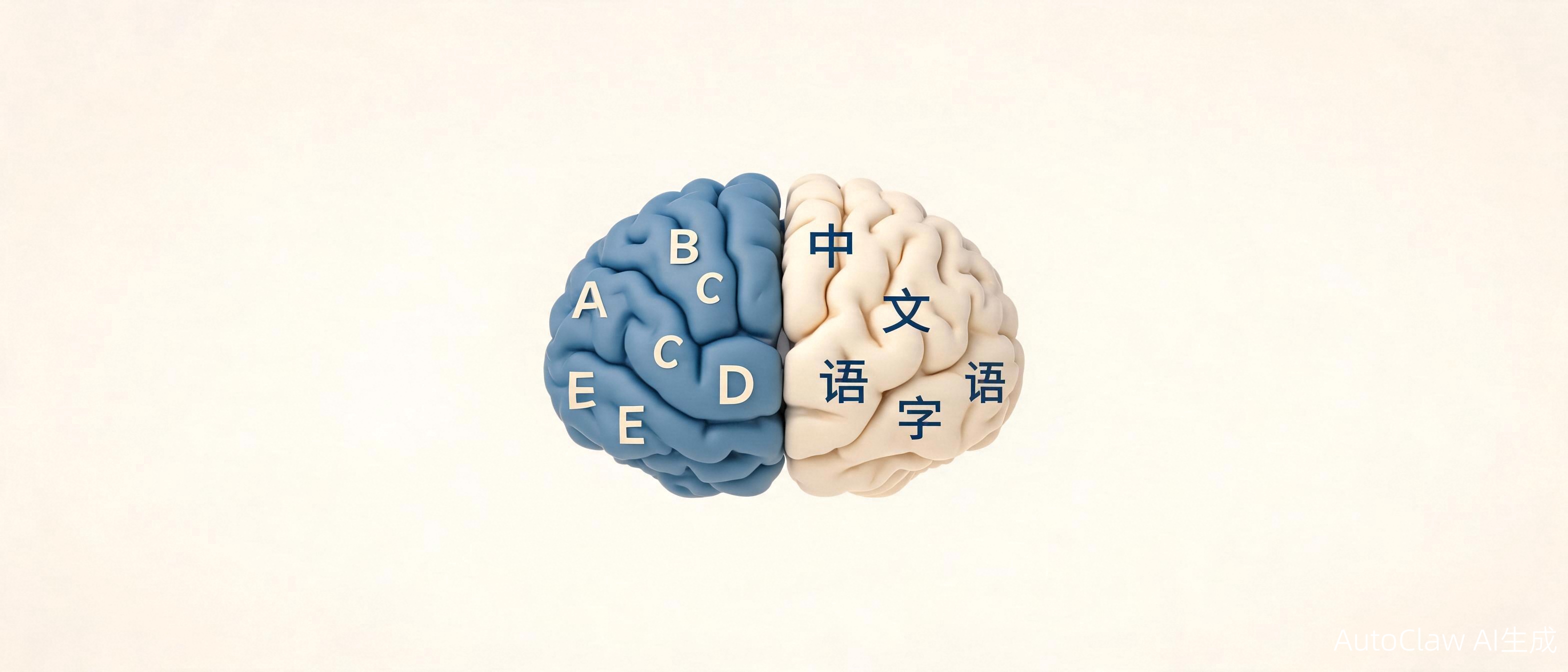
Decades of research suggest that speaking two languages forges a more resilient brain — one that can postpone the symptoms of dementia by several years
来源 The Guardian / Scientific American / York University(综合)作者 外刊精读专栏日期 2026-09-13难度 难
【1】For two decades, one question has animated neuroscience: whether speaking two languages daily reshapes the brain in ways that matter in old age.The answer is subtle — bilingualism does not prevent dementia, but it seems to build a deep reserve the aging mind can draw on long after damage has begun.
【2】The most influential evidence comes from longitudinal research at York University in Toronto, whose psychologists tracked hundreds of memory-clinic patients with the same diagnosis.Comparing bilingual and monolingual patients, all else being equal, they found a pattern too consistent to dismiss as chance.
【3】On average, bilingual patients developed symptoms of Alzheimer's disease four to five years later than their monolingual counterparts — a gap persisting even when brain scans showed comparable deterioration.The two groups were damaged to a similar degree; what differed was how long each could keep functioning before the disease announced itself.
【4】Neuroscientists attribute the effect to executive control, the mental machinery governing attention, inhibition and the switching between tasks.Because a bilingual must constantly suppress one language while producing another, the practice exercises this system daily, forging denser connections that serve as a reservoir of cognitive reserve.
【5】Neuroimaging lends weight to this account: scans of lifelong bilinguals reveal greater gray-matter volume and more efficient activity in precisely the regions that normally atrophy with age.Far from being a burden, juggling two vocabularies recruits extra networks, letting the brain reroute around damaged tissue.
【6】"Bilingualism is not a magic bullet," cautions a researcher whose own work popularized the idea."What it seems to do is build a richer system that tolerates more damage before it fails." The effect, she insists, is one of delay rather than immunity.
【7】Not every study has reproduced this so-called bilingual advantage; critics note that early papers suffered from small samples and imperfect controls.Some argue that the true protective factors may be education, occupation or lifelong intellectual engagement, of which bilingualism is merely one expression.Not until better-controlled studies appeared did the field begin to settle.
【8】Whatever the final verdict, the research speaks to parents and policymakers, who have sometimes treated a second language as a luxury to drop when budgets tighten.If language learning is a form of cognitive investment, cutting it from schools may impose a cost far heavier than the saving it yields, let alone one that later spending can repair.
【9】For the individual, the lesson is humbling in the best sense: the choices we make in youth and middle age, however ordinary, quietly stockpile resources for the decades ahead.Bilingualism may never halt the aging brain; yet by forging a more resilient architecture, it offers what medicine cannot — a few more years of clear thought, granted to those who simply kept speaking.
原文出处:本文根据 Ellen Bialystok(约克大学)等关于"双语与认知储备 / 阿尔茨海默病"的系列纵向研究,及 The Guardian、Scientific American 相关报道(2026-09 上旬)综合整理改写,供学习使用。
三、长难句分析(三步拆解法)
For two decades, one question has animated neuroscience: whether speaking two languages daily reshapes the brain in ways that matter in old age.
主干:one question has animated neuroscience(主语 + 谓语 + 宾语)
同位语从句:whether speaking two languages daily reshapes the brain(whether 引导,说明 question 的具体内容;speaking 为动名词作从句主语)
Comparing bilingual and monolingual patients, all else being equal, they found a pattern too consistent to dismiss as chance.
主干:they found a pattern(主语 + found + 宾语)
现在分词作状语:Comparing bilingual and monolingual patients("通过比较……",表示方式)
独立主格:all else being equal("其他条件相同的情况下",逻辑主语 all else + 现在分词 being)
固定结构:too consistent to dismiss as chance(too + adj. + to do,"太……而不能……")
考点:现在分词作状语;独立主格结构;too … to …
译文:在其他条件相同的情况下比较双语与单语患者,他们发现了一种过于一致、难以归为偶然的规律。
On average, bilingual patients developed symptoms of Alzheimer's disease four to five years later than their monolingual counterparts — a gap persisting even when brain scans showed comparable deterioration.
主干:bilingual patients developed symptoms of Alzheimer's disease(主语 + developed + 宾语)
同位语 + 现在分词作定语:a gap persisting even when …(破折号引出,解释整个前半句;persisting 作后置定语修饰 gap)
让步状语从句:even when brain scans showed comparable deterioration(even when 引导,"即使当……时")
Because a bilingual must constantly suppress one language while producing another, the practice exercises this system daily, forging denser connections that serve as a reservoir of cognitive reserve.
主干:the practice exercises this system daily(主语 + exercises + 宾语 + 状语)
原因状语从句:Because a bilingual must constantly suppress one language while producing another(内含 while producing 现在分词作时间状语,表"同时")
If language learning is a form of cognitive investment, cutting it from schools may impose a cost far heavier than the saving it yields, let alone one that later spending can repair.
主干:cutting it from schools may impose a cost(动名词短语 cutting it from schools 作主语 + may impose + 宾语)
条件状语从句:If language learning is a form of cognitive investment(If 引导)
比较级 + let alone:a cost far heavier than the saving it yields, let alone one that later spending can repair(far + 比较级表示"……得多";let alone 引出更进一层)
定语从句(省略关系代词):that later spending can repair(修饰 one)
另注:第 7 段的倒装句 "Not until better-controlled studies appeared did the field begin to settle."(否定词 Not until 置于句首,主句用部分倒装 did the field begin),以及第 6 段 "a researcher whose own work popularized the idea" 中 whose 引导的定语从句,均为高考语法填空与阅读理解的高频考点,请一并留意。
仿写题:仿照第 9 段 "Bilingualism may never halt the aging brain; yet by forging a more resilient architecture, it offers what medicine cannot — a few more years of clear thought."(分号并列两个分句 + 现在分词短语 by doing 作方式状语 + what 引导的宾语从句)的句式,围绕「坚持运动」「坚持阅读」或「绿色生活」写一个句子。