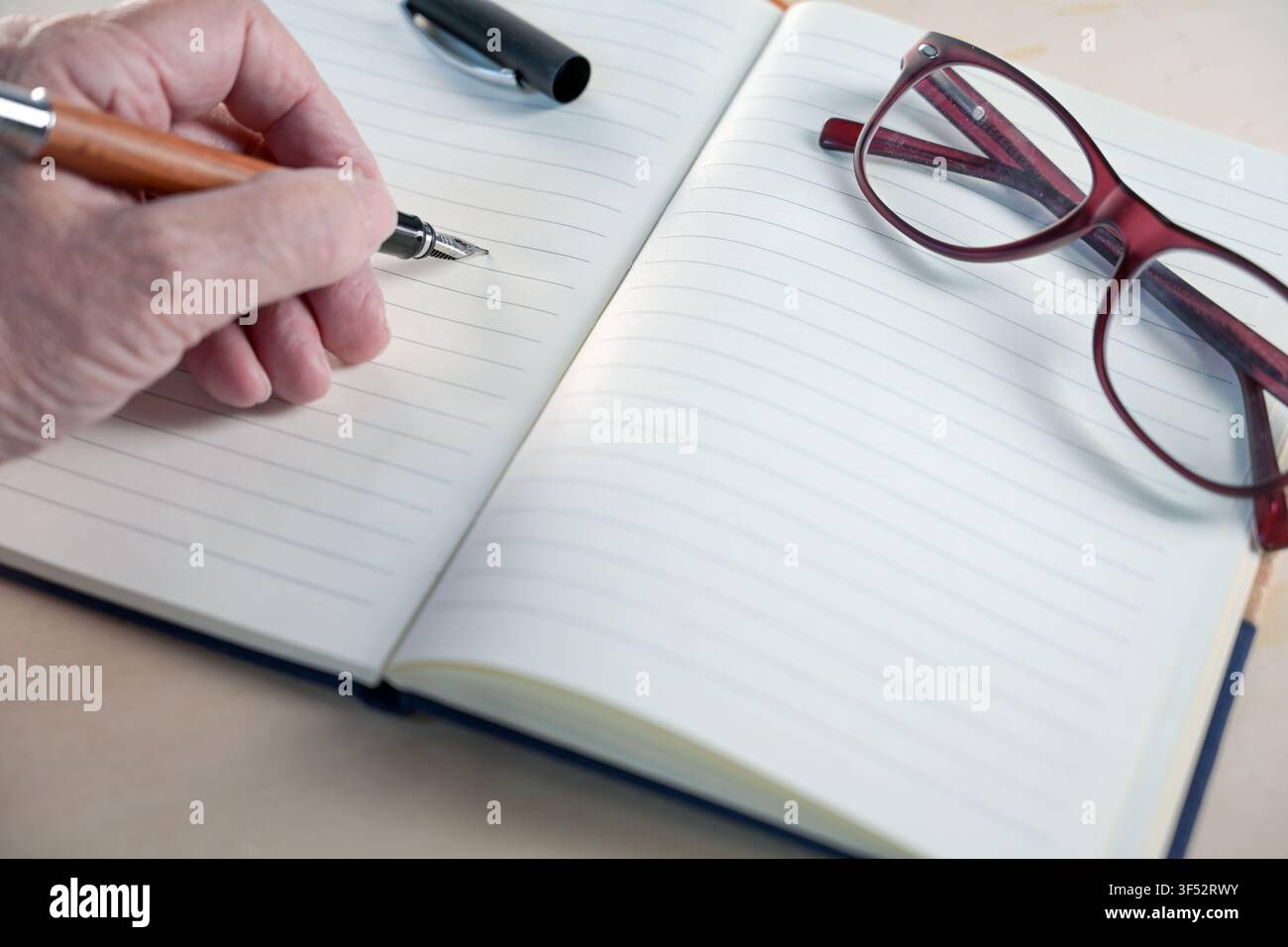
An EEG study finds that forming letters by hand produces far more widespread brain connectivity than typing — with profound implications for how we learn in a digital age
来源 Scientific American / Frontiers in Psychology / NTNU(综合)作者 外刊精读专栏日期 2026-09-16难度 难
【1】As classrooms across the world digitize at an accelerating pace, the humble act of writing by hand has been steadily relegated to the margins of the curriculum, a skill that many policymakers now regard as little more than a nostalgic relic.Yet a growing body of neuroscience is asking a question that cuts to the heart of how we learn: when we trade the pen for the keyboard, what, precisely, do we lose?
【2】The question was taken up most directly by a team at the Norwegian University of Science and Technology, whose study, published in the journal Frontiers in Psychology, fitted 36 university students with electrode nets to record the electrical activity of the brain.While the participants wrote words by hand with a digital pen and, on other trials, typed the same words on a keyboard, the researchers measured what neuroscientists call "brain connectivity" — the degree to which distant regions of the cortex fire in synchrony.
【3】The results were unambiguous.Handwriting, the team found, produced far more widespread and more intricate patterns of connectivity across the brain than typing did, particularly in regions associated with memory encoding and the processing of sensory information.Typing, by contrast, elicited activity that was comparatively localized and transient, leaving only a faint imprint in the same networks.
【4】The mechanism, the researchers argue, lies in the demands of forming letters.Writing by hand requires precise, carefully controlled fine motor movements, and it is this deliberate sensorimotor engagement — the need to shape each stroke, to trace each letter and coordinate eye with hand — that appears to synchronize brain waves across hemispheres, forging the neural links on which lasting memory depends.
【5】Typing, in this account, is a victim of its own efficiency.Because every letter is produced by an identical tap of a key, the movement carries almost no information about the shape of the word, and the brain is spared the slow, effortful work that handwriting imposes.What the keyboard gains in speed, it surrenders in depth, a trade-off that researchers believe helps explain why notes taken by hand are often better remembered than those typed verbatim.
【6】The findings extend a long line of evidence.Earlier studies have shown that children who learn to write letters by hand recognize them more quickly and read more fluently, and that students who take handwritten notes retain concepts longer, a phenomenon psychologists attribute to the deeper processing that slower writing demands — a processing through which new information is both retention-friendly and, over time, consolidated.
【7】The researchers are careful, however, not to frame the debate as a simple either/or.Typing, they concede, offers advantages that handwriting cannot match — speed, legibility, and the ease of editing — and in an age of proliferating digital tools, the keyboard is unlikely to be abandoned.The point, they insist, is not to reject technology but to recognize what is at stake when handwriting is pushed to the margins, let alone eliminated.
【8】That recognition carries practical weight.As some school systems scale back or abandon cursive instruction, cognitive scientists urge a measured balance: keep the keyboard for speed and revision, but preserve handwriting as a deliberate tool for the moments when understanding, rather than recording, is the goal.The slow, embodied act of writing, they argue, is not a relic but a cognitive instrument.
【9】For students and teachers alike, the message is at once humbling and empowering.That the simple movement of a pen across paper can so visibly reshape the brain suggests that learning is not merely the passive receipt of information but an act of construction — and that the most enduring understanding may still begin, quite literally, by hand.
原文出处:本文根据 Scientific American 报道《Why Writing by Hand Is Better for Memory and Learning》(2024-02-21)、挪威科技大学(NTNU)Van der Weel 与 Van der Meer 团队发表于 Frontiers in Psychology(2024)的脑电图研究,及 Edutopia 后续综述(2026-05)综合整理改写,供学习使用。
三、长难句分析(三步拆解法)
While the participants wrote words by hand with a digital pen and, on other trials, typed the same words on a keyboard, the researchers measured what neuroscientists call "brain connectivity" — the degree to which distant regions of the cortex fire in synchrony.
主干:the researchers measured what neuroscientists call "brain connectivity"(主语 + measured + what 宾语从句)
时间状语从句:While the participants wrote words by hand ... and ... typed the same words(while 引导,内含两个并列谓语 wrote 与 typed)
同位语 + 定语从句:the degree to which distant regions of the cortex fire in synchrony(破折号引出,解释 connectivity;to which 引导定语从句)
Writing by hand requires precise, carefully controlled fine motor movements, and it is this deliberate sensorimotor engagement — the need to shape each stroke, to trace each letter and coordinate eye with hand — that appears to synchronize brain waves across hemispheres, forging the neural links on which lasting memory depends.
主干:Writing by hand requires ... movements(and 连接的并列句第一分句,动名词短语作主语)
强调句型:it is this deliberate sensorimotor engagement ... that appears to synchronize ...(it is ... that ...,强调主语)
同位语:the need to shape each stroke, to trace each letter and coordinate eye with hand(解释 engagement,三个并列不定式)
现在分词作结果状语 + 定语从句:forging the neural links on which lasting memory depends(forging 表结果;on which 定语从句修饰 links)
考点:动名词作主语;it is ... that 强调句;同位语;现在分词作结果状语;"介词 + which" 定语从句
What the keyboard gains in speed, it surrenders in depth, a trade-off that researchers believe helps explain why notes taken by hand are often better remembered than those typed verbatim.
主干:it surrenders in depth(主语 it + 谓语 surrenders + 状语 in depth)
前置宾语从句:What the keyboard gains in speed(what 引导,作 surrenders 的宾语,置于句首)
Earlier studies have shown that children who learn to write letters by hand recognize them more quickly and read more fluently, and that students who take handwritten notes retain concepts longer, a phenomenon psychologists attribute to the deeper processing that slower writing demands.
主干:Earlier studies have shown that ... and that ...(主语 + have shown + 两个并列 that 宾语从句)
宾语从句 1:children who learn to write letters by hand recognize them more quickly and read more fluently(who 定语从句修饰 children)
宾语从句 2:students who take handwritten notes retain concepts longer(who 定语从句修饰 students)
同位语 + 定语从句:a phenomenon psychologists attribute to the deeper processing that slower writing demands(a phenomenon 概括前文;psychologists attribute to 为省略关系代词的定语从句;that 定语从句修饰 processing)
That the simple movement of a pen across paper can so visibly reshape the brain suggests that learning is not merely the passive receipt of information but an act of construction — and that the most enduring understanding may still begin, quite literally, by hand.
主干:That the simple movement ... can so visibly reshape the brain suggests that ...(That 主语从句 + 谓语 suggests + that 宾语从句)
主语从句:That the simple movement of a pen across paper can so visibly reshape the brain(That 引导,作主语)
宾语从句 + 并列结构:that learning is not merely the passive receipt of information but an act of construction(not merely ... but ... "不仅仅是……而是……")
并列宾语从句:and that the most enduring understanding may still begin, quite literally, by hand(破折号后 and that 引出第二个宾语从句;quite literally 作插入语)
考点:that 主语从句;that 宾语从句;not merely ... but ... 并列;插入语
仿写题:仿照第 9 段 "That the simple movement of a pen across paper can so visibly reshape the brain suggests that learning is not merely the passive receipt of information but an act of construction ..."(That 引导主语从句 + not merely ... but ...)的句式,围绕「坚持阅读」「保持运动」或「绿色生活」写一个句子。