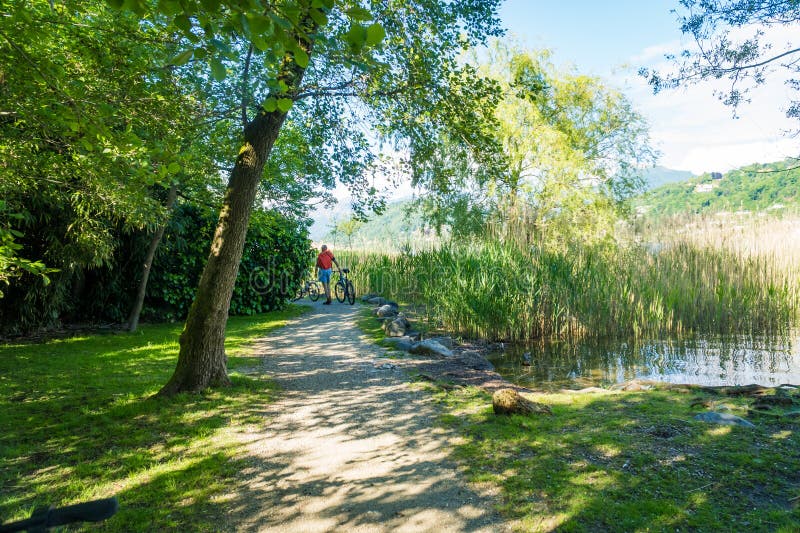
【1】Where do good ideas come from?For centuries, some of history's most original minds have insisted that the answer often arrives on foot.Nietzsche walked for hours before writing; Thoreau roamed the woods; Steve Jobs held meetings while strolling.Now science is beginning to test this folk wisdom with care.
【2】The modern study of walking and creativity began with a famous experiment at Stanford University.Researchers Marily Oppezzo and Daniel Schwartz asked volunteers to complete tests of creativity while either seated or walking, measuring their ability to generate novel and useful ideas — a capacity known as divergent thinking.
【3】The Stanford results were striking: walking yielded a large boost in divergent thinking, with participants producing more ideas, and more original ones, on the move.A 2026 systematic review and meta-analysis has now synthesized this and dozens of later studies to ask how strong the effect really is.
【4】The review's conclusion is clear.Across the accumulated experiments, walking produced what the authors describe as a "large increase" in divergent thinking, confirming that the simple act of putting one foot in front of the other can enhance the generation of ideas.
【5】The effect, however, is specific rather than universal.Walking reliably improves divergent thought — the broad search for many possible answers — while its influence on convergent thinking, the narrowing pursuit of a single correct solution, is weaker and more ambiguous.
【6】Why should movement sharpen the imagination?Researchers propose several mechanisms: physical activity raises arousal and improves mood, the changing environment provides fresh stimuli, and the gentle rhythm of walking may free attention to wander — together channeling mental energy toward cognitive exploration rather than fixed routines.
【7】For educators and workers, the implication is practical.Because walking requires no special equipment or training, it ranks among the most feasibleinterventions available for unlocking creative thinking — a possibility the authors frame as both intriguing and refreshingly low-cost.
【8】The authors are careful about limits.The studies vary widely in design, making the evidence heterogeneous, and most participants were young adults, so the findings may not apply equally to everyone.Nor can a causal link be fully quantified: it remains possible that the benefits come less from walking itself than from the simple act of stepping away from a desk and a screen.
【9】Still, the message for students is hard to ignore.If the mind stalls over a hard problem, the research suggests that the best move may be, quite literally, to move — to walk, wander, and let robust science, not just folklore, walk us toward better ideas.
原文出处:本文根据 Thabane 等 2026 年系统综述《The impact of walking on creative thinking: a systematic review》及斯坦福大学 Oppezzo & Schwartz(2014)经典实验研究综合整理改写,供学习使用。
三、长难句分析(三步拆解法)
Researchers Marily Oppezzo and Daniel Schwartz asked volunteers to complete tests of creativity while either seated or walking, measuring their ability to generate novel and useful ideas — a capacity known as divergent thinking.
主干:Researchers ... asked volunteers to complete tests of creativity(主语 + asked + 宾语 + 不定式宾补)
时间状语(省略式):while either seated or walking(= while they were either seated or walking)
现在分词作状语:measuring their ability to generate novel and useful ideas("测量……的能力")
同位语 + 过去分词作定语:a capacity known as divergent thinking(解释 ability;known as 修饰 capacity)
考点:ask sb to do;while + 分词(省略主语);现在分词作状语;过去分词作定语;同位语
Walking reliably improves divergent thought — the broad search for many possible answers — while its influence on convergent thinking, the narrowing pursuit of a single correct solution, is weaker and more ambiguous.
主干(并列句):Walking reliably improves divergent thought ... while its influence ... is weaker and more ambiguous(while 表对比)
同位语(破折号引出):the broad search for many possible answers(解释 divergent thought)
同位语(逗号引出):the narrowing pursuit of a single correct solution(解释 convergent thinking)
Physical activity raises arousal and improves mood, the changing environment provides fresh stimuli, and the gentle rhythm of walking may free attention to wander — together channeling mental energy toward cognitive exploration rather than fixed routines.
主干(三个并列分句):physical activity raises ... and improves ... ; the changing environment provides ... ; and the gentle rhythm ... may free attention ...
现在分词作结果状语:together channeling mental energy toward cognitive exploration rather than fixed routines("共同把……引向……而非……")
Nor can a causal link be fully quantified: it remains possible that the benefits come less from walking itself than from the simple act of stepping away from a desk and a screen.
主干(部分倒装):Nor can a causal link be fully quantified(否定词 Nor 置于句首,情态动词 can 提前)
同位语(冒号引出):it remains possible that ...(it 作形式主语,that 从句为真正主语)
比较结构:less from walking itself than from the simple act of stepping away(less ... than ... "与其说……不如说……")
考点:Nor 句首部分倒装;形式主语 it;that 主语从句;less ... than 比较结构
仿写题:仿照第 8 段 "...the benefits come less from walking itself than from the simple act of stepping away from a desk and a screen."(less ... than ... 与其说……不如说……)的句式,围绕「学习进步」「阅读收获」写一个句子。