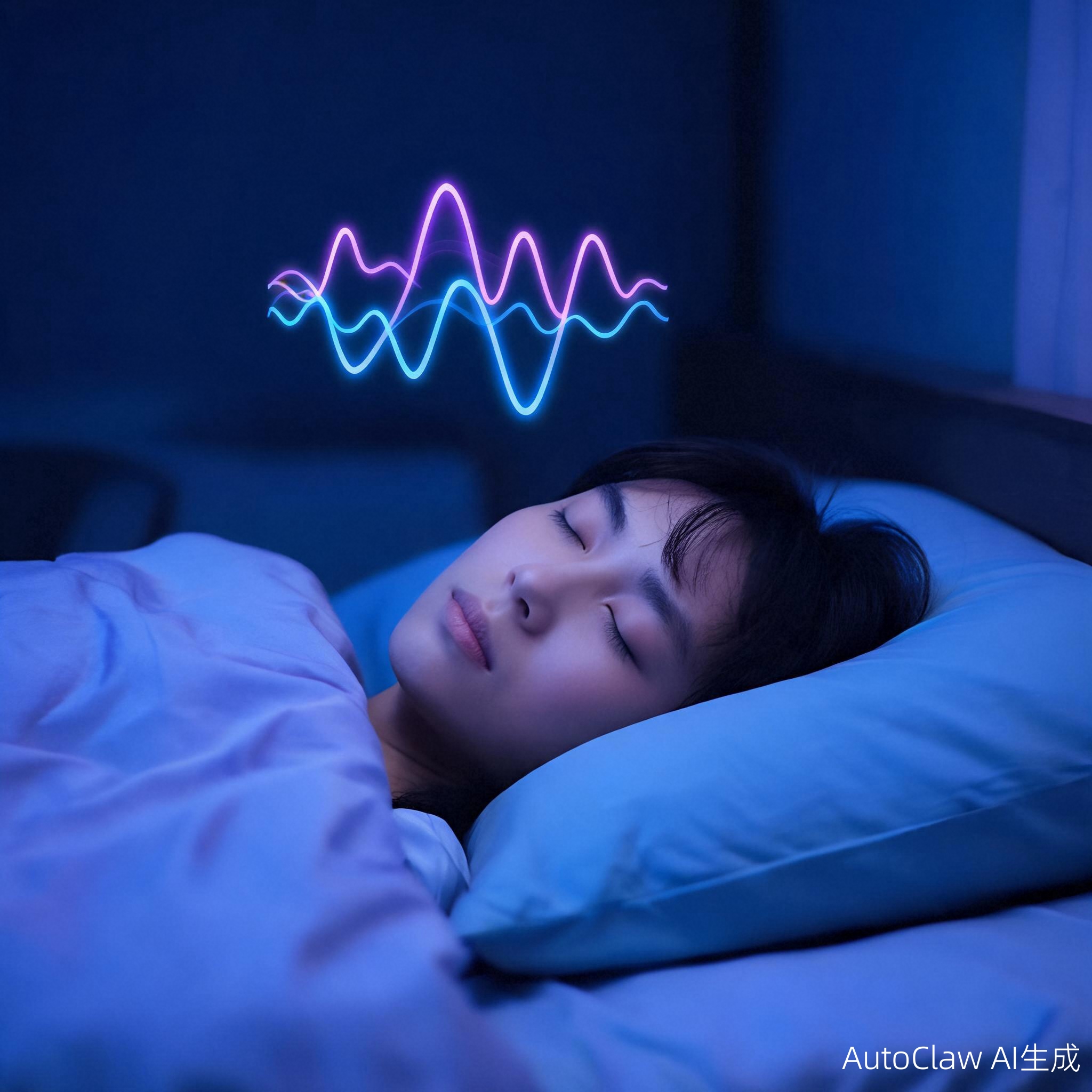
【1】Every night, while we sleep, the brain appears to give itself a thorough cleaning, yet for decades scientists could not explain precisely how.The discovery of the glymphatic system in 2013 showed that cerebrospinalfluid flows through the brain's tissue, but what drives this tide has remained one of neuroscience's most stubborn puzzles.
【2】A study published in the journal Cell, led by researchers at the University of Copenhagen and the University of Oxford, now claims to have located the long-sought "pump".The team focused on norepinephrine, a signalling molecule that the brainstem releases in slow, rhythmic waves during deep, non-REM sleep.
【3】The researchers observed that every fifty seconds or so, a surge of norepinephrine makes blood vessels in the brain contract, and each contraction squeezes cerebrospinal fluid through the tissue, flushing out metabolic waste.This slow "vasomotion", they argue, acts as a piston whose regular strokes wash the sleeping brain.
【4】To watch the process unfold, the scientists implanted fibre-optic probes into the brains of living mice, recording norepinephrine levels and fluid movement in real time as the animals slept.With fluorescenttracers injected into the fluid, the team could track the passage of waste from deep regions toward the surface.
【5】The waste being removed includes amyloid-beta, the sticky protein whose accumulation is a hallmark of Alzheimer's disease.Sleep has long been linked to the risk of dementia, and the new findings, if they hold, provide a mechanical explanation for that connection.
【6】Most strikingly, the team tested zolpidem, a widely used sleep medication, and found that it suppressed the norepinephrine waves and reduced fluid transport.This raises the unsettling possibility that some sleep aids, by sedating the brain, may impair the very clearance that sleep exists to perform.
【7】The authors are careful to stress that the experiments were performed in mice, and that the results cannot yet be translated directly to humans.Whether the pump can be strengthened to prevent dementia — let alone to treat it — remains an open question demanding years of clinical study.
【8】Independent researchers praised the work for closing a critical gap, while cautioning that a good night's sleep is shaped by many factors, from stress to caffeine.Rarely, they note, has a single experiment made so vividly clear that sleep is not a passive state but an active, physical process of self-repair.
【9】For the public, the message is at once humbling and practical.The body's nightly maintenance, driven by rhythms we barely notice, reminds us that sleep is not an indulgence to be sacrificed, but a physiological necessity whose benefits we are only beginning to understand.
The discovery of the glymphatic system in 2013 showed that cerebrospinal fluid flows through the brain's tissue, but what drives this tide has remained one of neuroscience's most stubborn puzzles.
主干:The discovery ... showed that ... , but what drives this tide has remained ...(并列句:showed + that 宾语从句;but 转折连接第二分句)
宾语从句:that cerebrospinal fluid flows through the brain's tissue(作 showed 的宾语)
A study published in the journal Cell, led by researchers at the University of Copenhagen and the University of Oxford, now claims to have located the long-sought "pump".
主干:A study ... now claims to have located the long-sought "pump"(主语 + claims + 不定式短语)
过去分词作后置定语:published in the journal Cell(修饰 study)
过去分词作后置定语:led by researchers at the University of Copenhagen and the University of Oxford(修饰 study)
考点:过去分词短语作后置定语(语法填空常考 done 的选择);claim to do / to have done 不定式完成式
The researchers observed that every fifty seconds or so, a surge of norepinephrine makes blood vessels in the brain contract, and each contraction squeezes cerebrospinal fluid through the tissue, flushing out metabolic waste.
主干:The researchers observed that ...(主语 + observed + that 宾语从句)
宾语从句(并列):a surge of norepinephrine makes blood vessels ... contract, and each contraction squeezes cerebrospinal fluid ...
The body's nightly maintenance, driven by rhythms we barely notice, reminds us that sleep is not an indulgence to be sacrificed, but a physiological necessity whose benefits we are only beginning to understand.
主干:The body's nightly maintenance ... reminds us that ...(主语 + reminds + 宾语 + that 宾语从句)
过去分词作后置定语:driven by rhythms we barely notice(修饰 maintenance;内含省略关系词的定语从句 we barely notice)
宾语从句:that sleep is not an indulgence ... but a physiological necessity(not ... but ... 结构)
定语从句:whose benefits we are only beginning to understand(whose 引导,修饰 necessity)
仿写题:仿照第 9 段 "The body's nightly maintenance, driven by rhythms we barely notice, reminds us that..."(过去分词作后置定语 + that 宾语从句)的句式,围绕「坚持锻炼」「规律作息」或「健康生活」写一个句子。