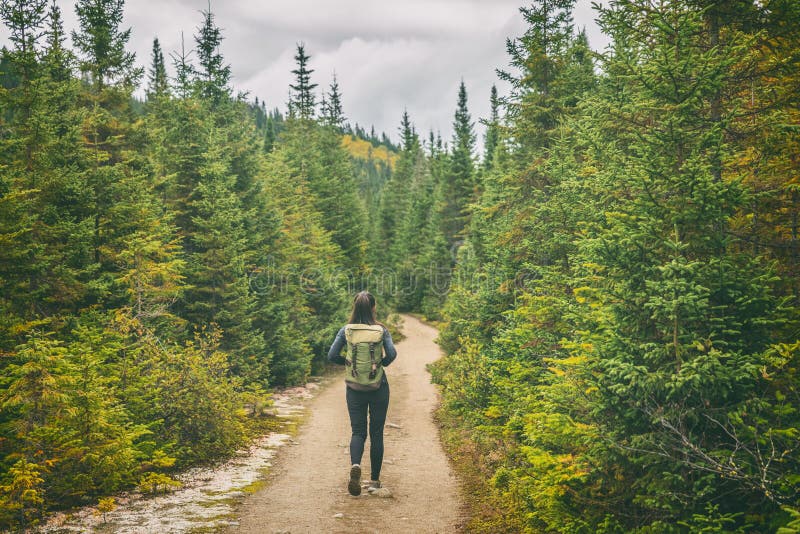
【1】For much of human history, being outdoors was not a choice but a condition of survival.Today, as urban life keeps us indoors, scientists are beginning to ask a deceptively simple question: how much nature, exactly, does a person need?
【2】To answer it, a team led by researchers at the University of Exeter drew on data from nearly 20,000 adults who had reported, over a full year, how much time they had spent in natural settings such as parks, woods and beaches.The responses were then matched against standard measures of self-reported health and psychological well-being.
【3】The results revealed a clear threshold.People who spent at least 120 minutes a week in nature were significantly more likely to describe their health as good and their well-being as high — a benefit that was consistent across men and women, young and old, rich and poor, and even among those with long-term illness.
【4】Just as striking was what the data did not show.Beyond roughly 200 to 300 minutes a week, the gains levelled off, suggesting that the dose, not its extravagance, is what matters.A modest, regular exposure, it seems, delivers most of what nature has to offer.
【5】Why nature should work at all remains a matter of lively debate.Some researchers point to the restorative effect of "soft fascination" — the gentle, effortless attention that natural scenes command, which allows a fatigued mind to recover; others emphasise reduced stress hormones and the simple fact that time outdoors is time away from screens and sedentary habits.
【6】"It doesn't have to be a trip to a national park," one of the authors noted, stressing that the benefit accumulated regardless of whether the two hours came in one long ramble or a dozen short strolls.What mattered, they insisted, was regularity rather than spectacle.
【7】The implications are quietly profound for public health.If a two-hour weekly "nature dose" is both cheap and universally available, then parks, street trees and allotments cease to be mere amenities and become a form of preventative medicine — one that no prescription and no budget are required to obtain.
【8】To be sure, the authors caution that their study is observational, drawn from self-reports, and cannot prove that nature causes better health rather than simply attracting those already well enough to visit it.Nor does it capture the quality of the green space or the seasons in which it was visited.
【9】Yet even with these caveats, the message carries an uncommon simplicity.In an age of expensive wellness regimes, the natural world may offer one of the few remedies that is at once free, effective and, for most of us, no farther than the nearest patch of green.
原文出处:本文根据 White, Alcock 等(University of Exeter)发表于《Scientific Reports》的研究《Spending at least 120 minutes a week in nature is associated with good health and wellbeing》(2019,近 2 万人样本)整理改写,供学习使用。
三、长难句分析(三步拆解法)
To answer it, a team led by researchers at the University of Exeter drew on data from nearly 20,000 adults who had reported, over a full year, how much time they had spent in natural settings such as parks, woods and beaches.
主干:a team … drew on data(主语 + drew on + 宾语)
目的状语:To answer it("为了回答它")
过去分词作后置定语:led by researchers at the University of Exeter(修饰 team)
定语从句(内含宾语从句):who had reported … how much time they had spent …(who 修饰 adults;how much 引导宾语从句作 reported 的宾语)
People who spent at least 120 minutes a week in nature were significantly more likely to describe their health as good and their well-being as high — a benefit that was consistent across men and women, young and old, rich and poor, and even among those with long-term illness.
主干:People … were significantly more likely to describe their health as good and their well-being as high(主语 + be likely to do)
定语从句:who spent at least 120 minutes a week in nature(who 修饰 People)
同位语(破折号引出):a benefit that was consistent across …(解释前句所述的好处)
定语从句:that was consistent across men and women, young and old, rich and poor(修饰 benefit)
考点:who 定语从句;be likely to do;同位语;that 定语从句;成对并列名词短语
Just as striking was what the data did not show: beyond roughly 200 to 300 minutes a week, the gains levelled off, suggesting that the dose, not its extravagance, is what matters.
主干(倒装):Just as striking was what the data did not show(表语前置 + was + what 表语从句,正常语序 What the data did not show was just as striking)
表语从句:what the data did not show
冒号后的同位说明:beyond roughly 200 to 300 minutes a week, the gains levelled off
Some researchers point to the restorative effect of "soft fascination" — the gentle, effortless attention that natural scenes command, which allows a fatigued mind to recover; others emphasise reduced stress hormones and the simple fact that time outdoors is time away from screens and sedentary habits.
并列句(分号连接):Some researchers point to … ; others emphasise …
If a two-hour weekly "nature dose" is both cheap and universally available, then parks, street trees and allotments cease to be mere amenities and become a form of preventative medicine — one that no prescription and no budget are required to obtain.
主干:then parks, street trees and allotments cease to be mere amenities and become a form of preventative medicine(主语 + cease to be … and become …)
条件状语从句:If a two-hour weekly "nature dose" is both cheap and universally available
同位语(破折号引出):one that no prescription and no budget are required to obtain(one 指代 a form)
定语从句:that no prescription and no budget are required to obtain(修饰 one)
考点:if 条件状语从句;cease to do / become 并列谓语;同位语;that 定语从句
仿写题:仿照第 9 段 "In an age of expensive wellness regimes, the natural world may offer one of the few remedies that is at once free, effective and … no farther than the nearest patch of green." 中 "In an age of … , … may offer one of the few … that is at once … " 的句式,围绕「低碳出行」「节约资源」或「坚持运动」写一个句子。