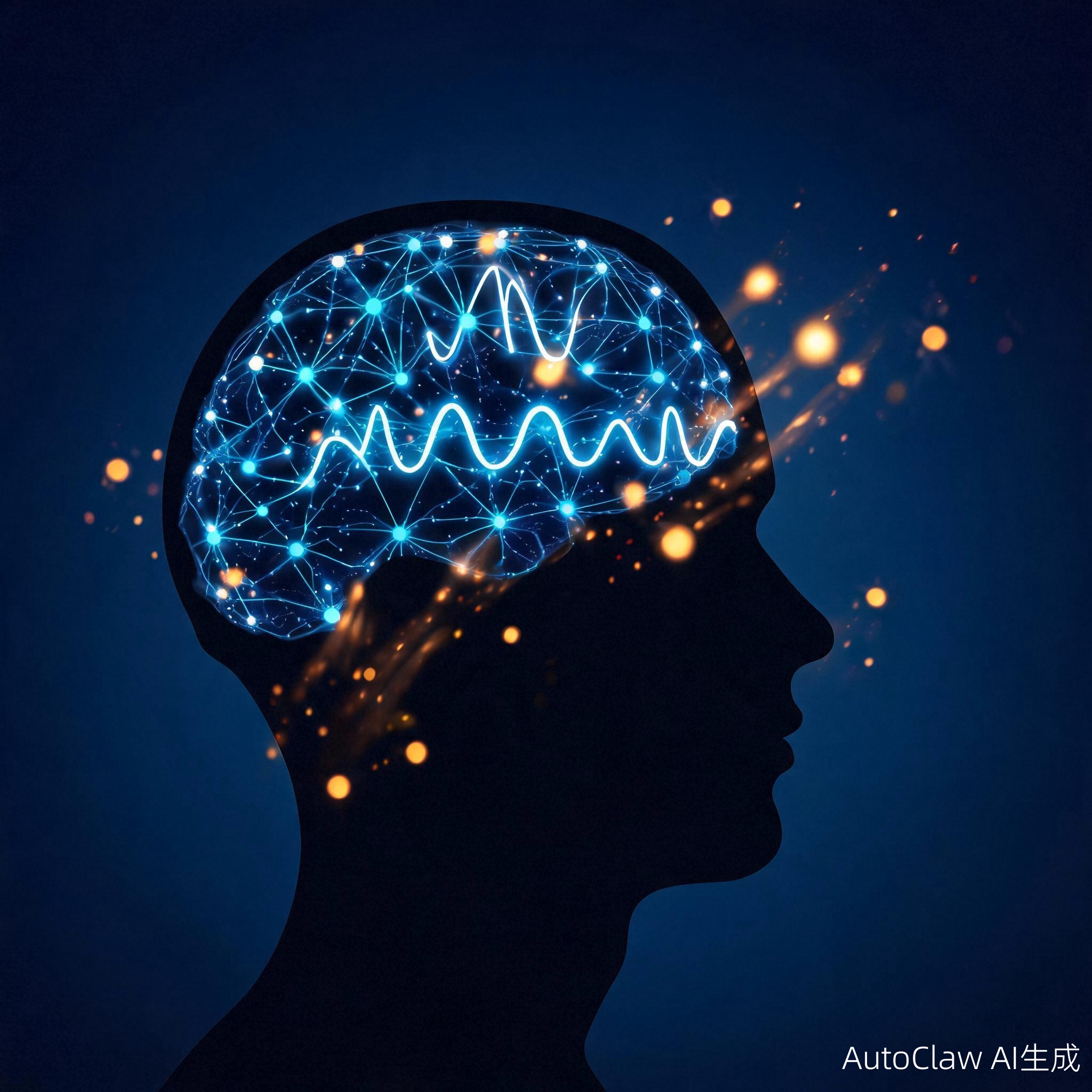
New research suggests theta brain waves tag important experiences while they happen, and the sleeping brain replays only these tagged traces to fix them in long-term memory
【1】Every waking hour, the human brain is flooded with sights, sounds and sensations, yet only a small fraction ever becomes durable memory.How the brain decides what to keep — and what to let vanish — has long puzzled neuroscientists, who once imagined the organ as a passive recorder rather than an active editor.
【2】Now a team of neuroscientists, whose findings were reported in late August, has offered a striking answer: the brain tags important experiences while they are still happening, using rhythmic bursts of electrical activity known as theta waves, and later replays only those tagged traces during sleep.
【3】The hippocampus, a seahorse-shaped structure deep in the brain that is central to memory formation, produces theta oscillations — slow, rhythmic waves of neural activity — whenever an animal or person is awake and attentive.Recording from this region during learning tasks, the researchers observed that experiences carrying significance — a reward, a surprise, or an emotional charge — coincided with a surge in these waves, the brain's way of flagging "this matters."
【4】During the sleep that followed, the brain did not replay everything indiscriminately.Instead, brief bursts called sharp-wave ripples, the hippocampus's signature nighttime signal, selectively reactivated the neural patterns that had been tagged, as if reviewing only the day's highlighted passages while the untagged pages quietly dissolved.
【5】This coupling of waking tags and sleeping replay, the authors argue, is the mechanism by which the brain manages its finite storage capacity.Memories left untagged during encoding were replayed far less often and were far more likely to fade, a result that suggests forgetting is less a failure than a deliberate act of triage.
【6】"The brain is not a camera; it is an editor," one researcher observed, adding that the tagging system amounts to a prediction about what will prove useful later.What the brain chooses to retain, in other words, is decided in advance — not reconstructed afterward.
【7】Behavioral tests supported the mechanism: items that had been tagged during learning were recalled with markedly higher accuracy days later.Interfering with theta activity during encoding, the team found, weakened the selective replay and blurred the line between the important and the trivial.
【8】The researchers caution that much of the evidence comes from animal models, and that translating these findings to human classrooms will require further work; correlation, they note, is not the same as causation.Even so, the implications for learning are hard to ignore: attention during study may be the very signal that tells a sleeping brain what deserves to survive, and it is during sleep that fragile memories are consolidated.
【9】For students and teachers alike, the message is at once humbling and empowering.Sleep is not downtime but an active filing system, and the hours spent focusing deliberately during the day shape, quite literally, what the night preserves — a reminder that attention is the first draft of memory.
原文出处:本文根据 Technology Networks 报道《Theta Brain Waves Help Select Memories During Sleep》(2026-08-28)及 Nature Neuroscience 相关神经科学研究综合整理改写,供学习使用。
三、长难句分析(三步拆解法)
The hippocampus, a seahorse-shaped structure deep in the brain that is central to memory formation, produces theta oscillations — slow, rhythmic waves of neural activity — whenever an animal or person is awake and attentive.
Recording from this region during learning tasks, the researchers observed that experiences carrying significance — a reward, a surprise, or an emotional charge — coincided with a surge in these waves, the brain's way of flagging "this matters."
主干:the researchers observed that ...(主语 + observed + that 宾语从句)
现在分词作状语:Recording from this region during learning tasks("在……时记录")
宾语从句:experiences carrying significance ... coincided with a surge in these waves
现在分词作后置定语:carrying significance(修饰 experiences)
同位语:the brain's way of flagging "this matters"(解释前面整个现象)
This coupling of waking tags and sleeping replay, the authors argue, is the mechanism by which the brain manages its finite storage capacity.
主干:This coupling ... is the mechanism(主语 + is + 表语)
插入语:the authors argue("作者们认为")
定语从句:by which the brain manages its finite storage capacity("介词 + which" 修饰 mechanism)
考点:"介词 + which" 引导定语从句;插入语
译文:作者们认为,清醒时的标记与睡眠中的重放这两者的耦合,正是大脑管理其有限存储容量的机制。
Memories left untagged during encoding were replayed far less often and were far more likely to fade, a result that suggests forgetting is less a failure than a deliberate act of triage.
主干:Memories ... were replayed ... and were far more likely to fade(主语 + 并列谓语)
过去分词作后置定语:left untagged during encoding(修饰 Memories)
同位语 + 定语从句:a result that suggests ...(that 引导定语从句修饰 result)
宾语从句(含比较结构):forgetting is less a failure than a deliberate act of triage(less A than B)
考点:过去分词作后置定语;that 定语从句;宾语从句;less ... than ... 比较结构
The researchers caution that much of the evidence comes from animal models, and that translating these findings to human classrooms will require further work; correlation, they note, is not the same as causation.
主干:The researchers caution that ... and that ...(主语 + caution + 两个并列宾语从句)
宾语从句①:much of the evidence comes from animal models
宾语从句②:translating these findings to human classrooms will require further work(动名词短语作主语)
仿写题:仿照第 9 段 "Sleep is not downtime but an active filing system, and the hours spent focusing ... shape what the night preserves."("not A but B" 并列结构 + 过去分词短语作定语)的句式,围绕「阅读」「坚持锻炼」或「时间管理」写一个句子。