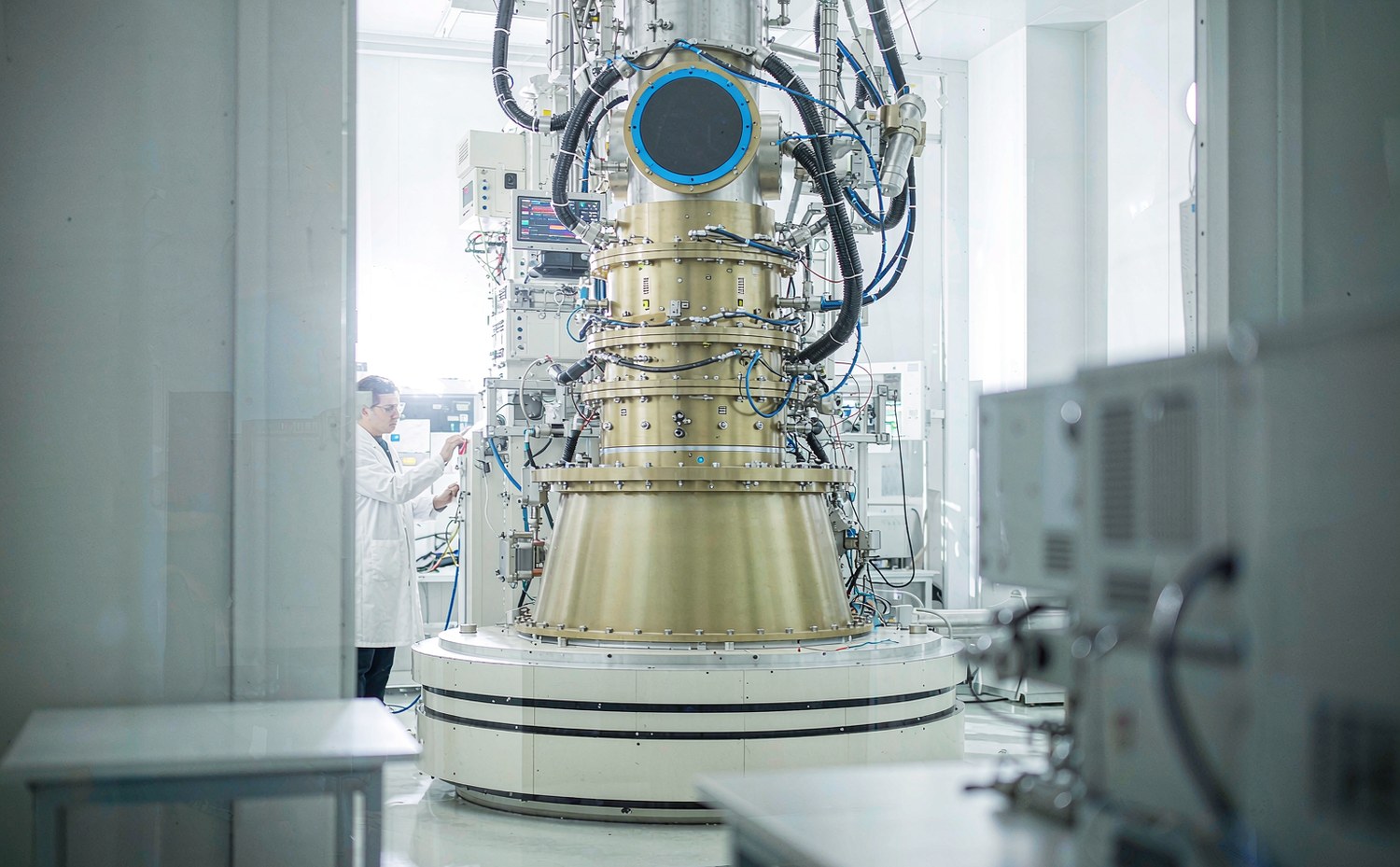
A quantum computer is not a faster laptop but a machine that fails constantly, and a 2026 experiment shows that adding more qubits can now make it fail less — the long-sought threshold finally crossed
【1】Quantum computers are usually introduced as machines that try every possible answer at once, which makes them sound like an unusually fast laptop.In practice they are machines that fail constantly, and the failures turn out to be the whole story, because a qubit is so fragile that stray heat or a single cosmic ray can undo months of preparation.
【2】For three decades the field has answered this with a mathematical bargain called the threshold theorem.Spread each logical qubit across many physical ones, interrogate them constantly and repair errors faster than they accumulate, and adding hardware will make the final answer more reliable rather than less, at the price of enormous redundancy.
【3】The theorem was never seriously questioned, but crossing the threshold with real hardware was a different matter.For years measured error rates fell just short of what the arithmetic demanded, close enough to keep the field funded and far enough to keep its promises safely in the future tense.
【4】A study published in Nature this August reports that a superconducting processor has finally crossed it.The team encoded one logical qubit across growing numbers of physical qubits and recorded how often the protected qubit failed as the code grew.The work was led by a university group and funded publicly, and its raw data were released alongside the paper.
【5】The pattern is precisely the one theory predicted.Each step up in code size roughly halved the logical error rate, so that more hardware bought less noise rather than more, which is the exact reverse of how every conventional computer behaves and the first time the pattern has held for long enough to be argued about.
【6】The mechanism is unglamorous, and it explains why the result is about reliability rather than speed.Redundant qubits are repeatedly measured and their answers compared, and the majority is used to infer what went wrong without ever reading the underlying state, since reading it directly would destroy the information the machine exists to protect.
【7】The cost is the part that headlines tend to skip.Each protected qubit still consumes thousands of physical ones, and the checking burns time as well as hardware, so a genuinely useful machine remains a machine of millions rather than a machine of hundreds, and the gap between those two numbers is where the next decade of engineering will be spent.
【8】That reframes the argument about applications.The interesting question is no longer whether a quantum computer will beat a classical one at some task, but which tasks can tolerate the enormous overhead of being done reliably, and who will pay for the hardware in the meantime, a question that no experiment can answer.
【9】So the milestone is not a demonstration of speed but of self-correction, a machine that watches itself fail and repairs the failure in time.Whether that is more impressive than a faster chip is a matter of taste.It is, at any rate, the step the theory always insisted had to come first.
Spread each logical qubit across many physical ones, interrogate them constantly and repair errors faster than they accumulate, and adding hardware will make the final answer more reliable rather than less, at the price of enormous redundancy.
主干:...and adding hardware will make the final answer more reliable(并列连词 and 连接"条件"与"结果"两个部分)
条件部分:三个祈使句并列——Spread ... , interrogate ... and repair ...,相当于 if you spread / interrogate / repair 的省略形式
比较结构:faster than they accumulate(快于它们累积的速度);more reliable rather than less(更可靠而不是更不可靠)——rather than 后接对比项
介词短语:at the price of enormous redundancy 作状语,表示"以……为代价"
考点:祈使句表条件;than 引导的比较从句;rather than 的对比;ones 替代前面复数名词 qubits
Redundant qubits are repeatedly measured and their answers compared, and the majority is used to infer what went wrong without ever reading the underlying state, since reading it directly would destroy the information the machine exists to protect.
主干:Redundant qubits are repeatedly measured ..., and the majority is used to infer ...(两个并列分句)
省略:their answers compared 中省略了 are(= their answers are compared),与前面 are measured 共用助动词
介词短语:without ever reading the underlying state 作状语,说明"推断"发生的前提
原因状语从句:since reading it directly would destroy the information ...;其中 the machine exists to protect 是定语从句修饰 information
考点:并列句的省略;without doing 结构;since 表原因;定语从句省略关系代词(information [that] the machine exists to protect)
The interesting question is no longer whether a quantum computer will beat a classical one at some task, but which tasks can tolerate the enormous overhead of being done reliably, and who will pay for the hardware in the meantime.
主干:The interesting question is no longer A, but B and C(表语为三个并列成分)
表语一:whether 引导的从句(是否……)——被 no longer 否定
表语二、三:which tasks can tolerate ... 与 who will pay for ... 两个从句并列,构成 not ... but ... 的对比
非谓语:of being done reliably 是动名词被动式作 overhead 的后置定语
考点:表语从句并列;no longer ... but ... 的对比;动名词被动式;in the meantime(在此期间)
仿写题:仿照第 8 段 "The interesting question is no longer whether X will beat Y at Z, but which Z can tolerate the enormous overhead of being done reliably."(把"胜负之争"改写为"承受能力之问")的句式,就一个你熟悉的议题(如人工智能写作、线上教学、自动驾驶)写一句"重新定义问题"的评论。