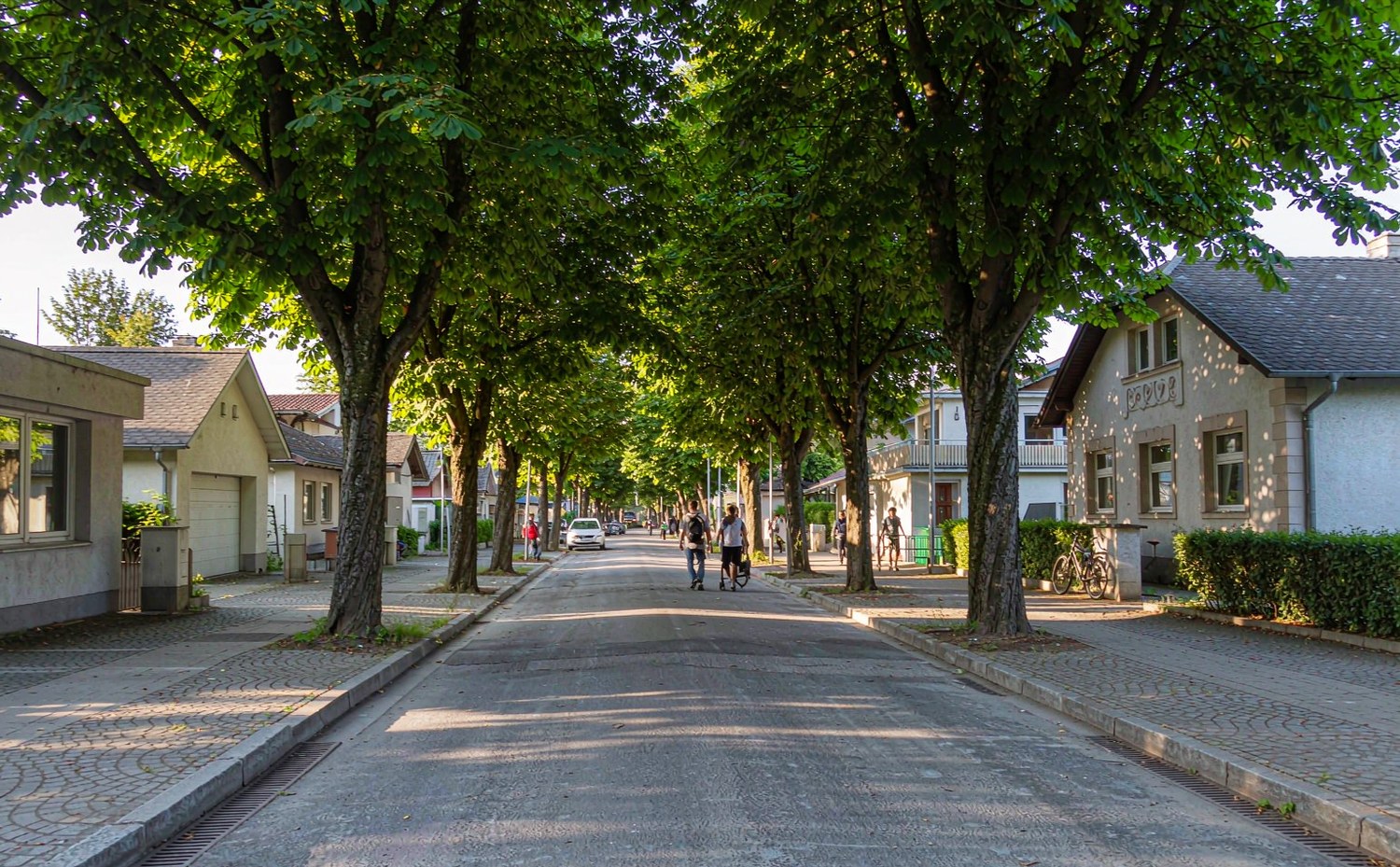
Heat kills quietly and unevenly, and a 2026 study across several hundred European cities finds that the neighbourhoods with the least tree cover carry the heaviest death toll — a gap that planting can narrow but never quite close
【1】Among all the disasters that make the evening news, heat is the one that kills most and is seen least, because its victims die at home, one at a time, days after the temperature has fallen.The deaths are counted in excess-mortality statistics rather than in collapsed buildings, and they are attributed to heart attacks and kidney failure rather than to the sun, which is why the toll is routinely revised upward months later.
【2】Inside a single city, however, the heat is not shared equally.A street of asphalt and air-conditioning exhaust can run several degrees hotter than a leafy avenue a kilometre away, so that the same forecast describes two quite different afternoons.That gap is not a curiosity; it is where the deaths are.
【3】A study published this year puts a number on that difference.Using satellite measurements of tree cover across several hundred European cities, the authors matched each neighbourhood's canopy with its recorded deaths during summer heat, and then asked how much of the variation the trees could explain once the usual suspects had been accounted for.
【4】The hard part is that leafy neighbourhoods are also wealthier ones, with better housing, more air-conditioning and fewer elderly residents living alone.To separate the tree from the money, the team controlled for income, age structure, building age and access to green space, leaving the canopy to account for what remained, a residual that turned out to be large.
【5】The association survived every control.Each ten-percentage-point increase in canopy cover was linked to a measurably lower heat mortality rate, and the effect was largest in the densest, poorest districts, where shade is scarcest and the population most exposed; in the most deprivation-heavy areas the modelled benefit was roughly double the city average.
【6】Two mechanisms do the work, and neither is mysterious.Leaves block direct sunlight and release water vapour that cools the air around them, so that a mature street tree behaves like a small, silent, self-maintaining piece of public infrastructure, provided it is given soil, water and room to grow.
【7】Trees are also slow, thirsty and politically awkward.A sapling planted this autumn will cast useful shade in fifteen years, needs water during exactly the droughts when cities are restricting it, and can push rents up in the very neighbourhoods it was meant to protect, a process planners call green gentrification.
【8】None of that makes planting a bad idea; it makes it an incomplete one.Canopy targets are easiest to meet on average and hardest to meet where they matter, so the useful measure is not a city-wide percentage but the distribution of shade across the streets where elderly and poor residents actually live.
【9】The temptation is to treat trees as decoration, a matter of amenity to be trimmed when budgets tighten.The mortality data suggest something less decorative.A canopy is infrastructure that pays for itself in avoided deaths, and it is the rare piece of infrastructure that gets better with age.
Among all the disasters that make the evening news, heat is the one that kills most and is seen least, because its victims die at home, one at a time, days after the temperature has fallen.
主干:heat is the one(主语 + 系动词 + 表语)
定语从句:that kills most and is seen least 修饰 the one,两个谓语并列(杀得最多、被看见最少)
原因状语从句:because its victims die at home ...;其中 one at a time 是方式状语,days after ... 是时间状语
介词短语前置:Among all the disasters ... 置于句首作范围限定,后接 that make the evening news 定语从句
考点:定语从句并列谓语;most / least 与最高级连用;时间状语 days after 的用法
To separate the tree from the money, the team controlled for income, age structure, building age and access to green space, leaving the canopy to account for what remained, a residual that turned out to be large.
主干:the team controlled for income, age structure, building age and access to green space(主语 + 谓语 + 四个并列宾语)
目的状语:To separate the tree from the money 置于句首,说明研究意图(把"树"与"钱"分开)
现在分词作结果状语:leaving the canopy to account for what remained——"从而让树冠去解释剩余部分",leave sb to do sth
同位语:a residual that turned out to be large 补充说明 what remained,其中 that 引导定语从句
考点:不定式作目的状语;control for 的统计含义;leave A to do B;同位语 + 定语从句
Canopy targets are easiest to meet on average and hardest to meet where they matter, so the useful measure is not a city-wide percentage but the distribution of shade across the streets where elderly and poor residents actually live.
主干:the useful measure is not A but B(so 连接因果,后一分句为核心判断)
前一分句:Canopy targets are easiest ... and hardest ...,两个形容词最高级并列,形成对照(平均上最易、要紧处最难)
地点状语从句:where they matter(在它们真正要紧的地方)
not A but B:不是全市百分比,而是树荫分布——把评价标准从"总量"改为"分配"
考点:最高级并列;where 引导的地点状语从句;not ... but ... 的对比;定语从句 where residents live
仿写题:仿照第 8 段 "X targets are easiest to meet on average and hardest to meet where they matter, so the useful measure is not a city-wide percentage but the distribution of Y."(把"平均指标"替换为"分布指标")的句式,就一个你熟悉的公共议题(如师资配置、医疗资源、图书馆藏书、体育场地)写一句"换一个考核口径"的评论。