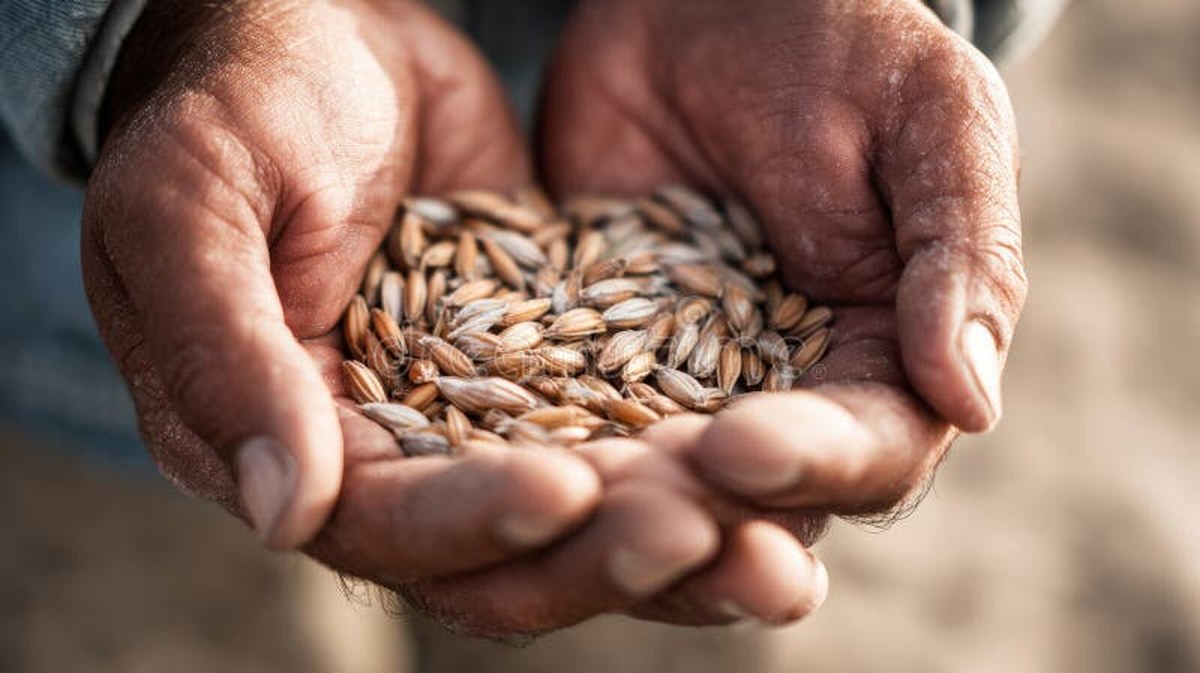
More than two billion people eat enough calories yet still lack the vitamins and minerals their bodies need — a condition called hidden hunger. As a warming climate quietly drains nutrients from staple crops, scientists argue that precise gene editing must be paired with conventional breeding to keep food both plentiful and nourishing
【1】More than two billion people consume enough calories to survive, yet still lack the vitamins and minerals their bodies need.This quiet form of malnutrition, known as hidden hunger, rarely appears in hunger statistics, because those affected are not visibly starving but merely undernourished in ways that slowly weaken their health.For billions of them, the shortfall begins with the staple crops — rice, wheat, maize, potatoes and cassava — that supply most of the energy in their daily diets.
【2】These staple crops are remarkably efficient at producing calories, which is precisely why they were adopted so widely.Yet decades of breeding that prized yield above all else raised calorie output while quietly widening the gap in vitamins and minerals, producing a food system that can fill a stomach without nourishing the body.
【3】Now climate change is quietly making that problem worse, in ways that are only beginning to be measured.A companion study jointly led by Ghent University and the University of Liège found that under future climate scenarios, the density of several B-vitamins and minerals in wheat grains will fall sharply, turning a nutritional challenge into a public-health one.Heat, drought and rising salinity do not merely reduce how much a field produces; they can also strip nutrients from the harvested grain.
【4】Against that backdrop, a review published in Nature in June 2026 asks how science might respond.Its lead author, Professor Dominique Van Der Straeten of Ghent University, worked with experts from institutions worldwide to examine how genetic technologies could raise the nutrient content of crops while making them tougher against climate stress.
【5】The authors argue that future agriculture has to meet three demands at once: it must produce enough food, improve its nutritional quality, and strengthen crops' resilience to drought, heat and salinity.Pursuing any one of these goals in isolation, the authors warn, is likely to undermine progress on the other two.
【6】Their central tool is CRISPR-based genome editing, a technique that allows scientists to alter specific plant traits with extraordinary precision.It can raise the vitamins and minerals that a grain accumulates, or switch on genes that help a plant cope with environmental stress.Because the edits are so targeted, they can improve nutrition without the long, unpredictable process of crossing thousands of plants.
【7】Crucially, however, the authors do not present gene editing as a silver bullet that can solve the problem on its own.Conventional breeding and older biotechnological methods, they insist, remain just as important, and the greatest gains are likely to come from combining approaches and tailoring them to particular crops and local conditions.
【8】The urgency of the situation is easy to overlook from the comfortable distance of a well-stocked supermarket.With roughly 700 million people still facing caloric hunger and the world committed to ending hunger by 2030, the authors argue that precision breeding should be adopted alongside other technologies rather than delayed by debate.
【9】What the review ultimately proposes is a shift in how we measure success: not merely how many tonnes a field yields, but how much nourishment a single grain can deliver.Feeding a growing population may depend less on growing more food than on growing better food.
原文出处:本文根据 Nature 综述论文《Genetic technologies to enhance crop nutritional value under climate change》(Dominique Van Der Straeten 等;Ghent University 及国际合作机构;Nature, 2026-06-25;DOI 10.1038/s41586-026-10593-6)及配套研究(Cao et al., Advanced Science, 2026)公开资料改写整理,供学习使用。
三、长难句分析(三步拆解法)
Yet decades of breeding that prized yield above all else raised calorie output while quietly widening the gap in vitamins and minerals, producing a food system that can fill a stomach without nourishing the body.
A companion study jointly led by Ghent University and the University of Liège found that under future climate scenarios, the density of several B-vitamins and minerals in wheat grains will fall sharply, turning a nutritional challenge into a public-health one.
主干:A companion study ... found that ...(主语 + 谓语 + 宾语从句)
过去分词作定语:jointly led by Ghent University and the University of Liège(修饰 study,说明由谁联合主导)
宾语从句:that ... the density of several B-vitamins and minerals ... will fall sharply(介词短语 under future climate scenarios 作状语前置)
现在分词作结果状语:turning a nutritional challenge into a public-health one(one 指代 challenge,避免重复)
考点:分词作后置定语;宾语从句中的状语前置;turn A into B;one 的替代用法
译文:由根特大学与列日大学联合主导的一项配套研究发现:在未来气候情景下,小麦籽粒中多种 B 族维生素与矿物质的浓度将大幅下降,把一个营养问题变成了公共卫生问题。
The authors argue that future agriculture has to meet three demands at once: it must produce enough food, improve its nutritional quality, and strengthen crops' resilience to drought, heat and salinity.
主干:The authors argue that ...(主句 + 宾语从句)
宾语从句主干:future agriculture has to meet three demands at once(at once 意为“同时”)
冒号后的同列三项:it must produce enough food, improve its nutritional quality, and strengthen crops' resilience ...(三个并列谓语,共用情态动词 must)
介词短语作定语:to drought, heat and salinity(修饰 resilience,表示“对……的抗逆性”)
考点:宾语从句;冒号引出并列说明;并列谓语共用 must;at once 的“同时”义;resilience to 的搭配
Conventional breeding and older biotechnological methods, they insist, remain just as important, and the greatest gains are likely to come from combining several approaches and tailoring them to particular crops and local growing conditions.
主语 + 插入语:Conventional breeding and older biotechnological methods, they insist(they insist 为插入语,主语实为前面的并列名词)
并列分句一:... remain just as important(remain 作系动词,just as important 作表语)
并列分句二:the greatest gains are likely to come from combining ... and tailoring ...(两个动名词并列作 from 的宾语)
固定搭配:tailor sth to sth(使……适合……)
考点:插入语;并列句;动名词作介词宾语;tailor ... to ... 的搭配;just as + 形容词
With roughly 700 million people still facing caloric hunger and the world committed to ending hunger by 2030, the authors argue that precision breeding should be adopted alongside other technologies rather than delayed by debate.
with 复合结构作状语:With roughly 700 million people still facing caloric hunger and the world committed to ending hunger by 2030(“with + 宾语 + 分词”,表示背景或伴随)
主句:the authors argue that ...(主句 + 宾语从句)
宾语从句中的被动:precision breeding should be adopted alongside other technologies(情态动词 + 被动语态)
rather than 的取舍:rather than delayed by debate(与其被争论耽搁,不如……)
考点:with 复合结构;宾语从句;should be adopted 的被动;rather than 连接并列成分表取舍
仿写题:仿照第 5 段 "X has to meet three demands at once: it must A, B, and C. Pursuing any one of these goals in isolation, ..., is likely to undermine progress on the other two."(has to meet three demands at once + 冒号列举 + in isolation + undermine)的句式,围绕「一项改革需要同时兼顾的几重目标」写一个段落。