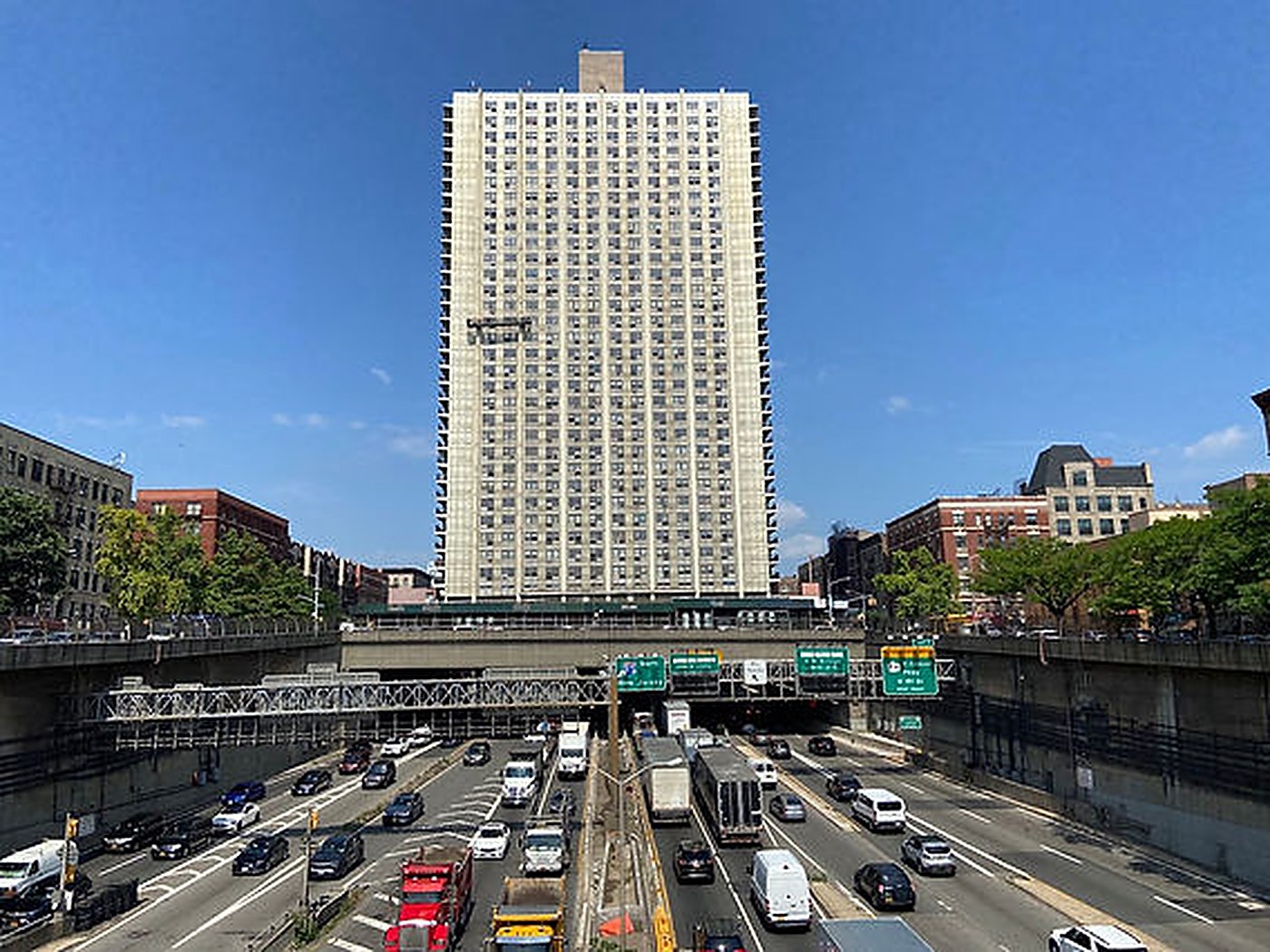
A 26-study meta-regression puts the cardiovascular toll of transport noise somewhere between one and sixteen per cent per ten decibels, depending on the statistical framework it is read with — while a sleep laboratory watches the damage happen in under half a minute
【1】At three in the morning a city is not silent but merely quieter, and what remains is exactly the part of the acoustic world a bedroom window was never built to stop.A lorry braking beneath the window can break a night's sleep for eight seconds and leave no memory behind, which is why the harm is so easy to dismiss.
【2】For two decades epidemiologists have asked whether that interruption, repeated night after night, raises the risk of heart attack and stroke, and the answer has always depended on how the question was framed.The World Health Organization's 2018 guidelines rested on evidence that stopped in 2015, so Elia Gonzato's team set out to rebuild those curves.
【3】Their review, published in the Journal of Exposure Science and Environmental Epidemiology, pooled 26 studies of long-term road, rail and aircraft noise against heart attack, ischaemic heart disease and stroke.Crucially, it derived the curves twice: once by conventional inverse-variance meta-regression, and once by a burden-of-proof framework that trimsoutliers and penalises implausible shapes.
【4】The conventional figures came out almost impossibly small, with road traffic noise lifting the risk of stroke by a relative one per cent for every ten decibels of day-evening-night level.Only two pairings, road noise with stroke and rail noise with heart attack, held under both methods, and even those were graded weak evidence.
【5】The distance between the two sets of numbers is a lesson in method rather than a rounding error, since identical railway data yield a risk ratio of 1.01 under conventional pooling.Rebuilt with trimming and shape constraints, the same data give 1.16, a margin wide enough to change what a city is willing to spend on a wall.
【6】Weak evidence is not the same as no effect; it means the direction is consistent while the size remains uncertain, and size is what a budget is written in.A relative risk of 1.05 looks negligible until it is multiplied by the share of a population above the threshold, which is why attributable burden is so sensitive to the decimal.
【7】The Global Burden of Disease study nonetheless still leaves transport noise out of its risk list, largely because exposure-response functions have never been stable enough to defend.The biology, by contrast, is uncomfortably concrete: in a soundproofed laboratory in Gothenburg, twelve volunteers slept five nights each while 120 noise events were played at 45 to 65 decibels.
【8】Traffic noise multiplied corticalarousals, and a finer measure of sleep depth rose within half a minute of each event and scaled with its loudness, betraying a nervous system registering what the sleepers never recalled.Blood drawn at dawn showed lactate, leucine and acetone all elevated, and continuous pink noise at 45 decibels returned them to baseline without improving how anyone said they had slept.
【9】That is the study's most troubling result: the body keeps the receipt even when the mind tears it up, so a night nobody remembers is not a night that cost nothing.The uncertainty in the decimal is no argument for waiting, but a reason to measure night-time noise on its own and to treat a window as what it has quietly become: medical equipment.
原文出处:本文据 Journal of Exposure Science and Environmental Epidemiology 2026 年第 36 卷 998–1012 页论文《Exposure-response relationship between transportation noise and cardiovascular disease outcomes: a systematic review and meta-regression analysis》(Elia Gonzato, Tessa M. I. Haverkate, Susanne Breitner-Busch, Anette Kocbach Bølling, Gunn Marit Aasvang, Michael Brauer, Vanessa Garcia, Sandra Spearman, Brecht Devleesschauwer, Juanita A. Haagsma, Periklis Charalampous;DOI 10.1038/s41370-026-00856-9)与 Communications Medicine 2026 年第 6 卷 114 号论文《Pink noise reduces impact of traffic noise on sleep and the blood metabolome: a cross-over pilot study》(Vincens N. 等,哥德堡大学;DOI 10.1038/s43856-026-01380-5)公开摘要与结果部分改写整理,供学习使用。
三、长难句分析(三步拆解法)
A lorry braking beneath the window can break a night's sleep for eight seconds and leave no memory behind, which is why the harm is so easy to dismiss.
主干:A lorry ... can break ... and leave ...(can 后带两个并列动词,主语是 A lorry)
后置定语:braking beneath the window(现在分词短语修饰 a lorry,交代场景,比定语从句更紧凑)
非限制性定语从句:which is why the harm is so easy to dismiss(which 指代前面整件事:打断八秒且不留记忆)
表语从句:why the harm is so easy to dismiss(作 is 的表语;easy to dismiss 是“容易被忽略”的双重被动意味)
For two decades epidemiologists have asked whether that interruption, repeated night after night, raises the risk of heart attack and stroke, and the answer has always depended on how the question was framed.
主干:epidemiologists have asked ... and the answer has depended ...(and 连接两个并列分句,时态都是现在完成时)
宾语从句:whether that interruption ... raises the risk(whether 引导,作 asked 的宾语;主语与谓语被插入语隔开)
插入语:repeated night after night(过去分词短语,相当于 which is repeated,起强调频率的作用)
介词宾语从句:how the question was framed(作 on 的宾语,把“答案”归因于“提法”)
考点:whether 宾语从句;过去分词插入语造成的主谓分离;depend on + 从句;frame 的熟词僻义
Crucially, it derived the curves twice: once by conventional inverse-variance meta-regression, and once by a burden-of-proof framework that trims outliers and penalises implausible shapes.
主干:it derived the curves twice(冒号前的总述,冒号后是对 twice 的具体交代)
并列方式状语:once by ... , and once by ...(once ... and once ... 是“一次……另一次……”的对照结构)
定语从句:that trims outliers and penalises implausible shapes(修饰 framework,两个并列谓语说明这套框架“主动做了什么”)
词法难点:inverse-variance(逆方差,按精度加权);burden of proof 原为法律术语“举证责任”,此处指“证据负担”评估框架
考点:冒号的总分结构;once ... and once ...;that 定语从句中的并列谓语;专业复合名词的拆解
A relative risk of 1.05 looks negligible until it is multiplied by the share of a population above the threshold, which is why attributable burden is so sensitive to the decimal.
主干:A relative risk of 1.05 looks negligible(主系表结构,先给出“看着可以忽略”的判断)
时间状语从句:until it is multiplied by the share of a population(until 在此不是“直到”而是“除非/在……之前”,构成转折)
后置定语:above the threshold(修饰 population,即“暴露超过限值的那部分人”)
非限制性定语从句:which is why ...(which 指代“乘以人口份额”这个动作,引出结论)
考点:until 的否定式语义;被动语态 be multiplied by;which 指代前文动作;attributable burden 的术语含义
Traffic noise multiplied cortical arousals, and a finer measure of sleep depth rose within half a minute of each event and scaled with its loudness, betraying a nervous system registering what the sleepers never recalled.
主干:Traffic noise multiplied cortical arousals, and a finer measure ... rose ... and scaled ...(and 连接两个分句,第二分句内部又有两个并列谓语)
时间状语:within half a minute of each event(within ... of 表示“在……之后……之内”,是“多快”的关键证据)
现在分词作结果状语:betraying a nervous system(主语是前面整件事:指标随声级上升,于是“暴露”了神经系统的状态)
现在分词作后置定语:registering what the sleepers never recalled(修饰 a nervous system;what 从句作 registering 的宾语)
考点:并列谓语的多层嵌套;within ... of 的时间含义;分词作结果状语与后置定语的区别;betray 的熟词僻义
仿写题:仿照第 9 段 "The uncertainty in the decimal is no argument for waiting, but a reason to measure night-time noise on its own and to treat a window as what it has quietly become: medical equipment."(用 is no argument for ... but a reason to ... 把"不作为的借口"翻转成"行动的理由",再用冒号给出一个出人意料的重新定义),就"人工智能对入门岗位的影响仍不确定"写一句你自己的定性句。