A 2026 study from the University of Texas at Austin models what it would take to cool data centres with oilfield wastewater, and finds that the physics works long before the money does
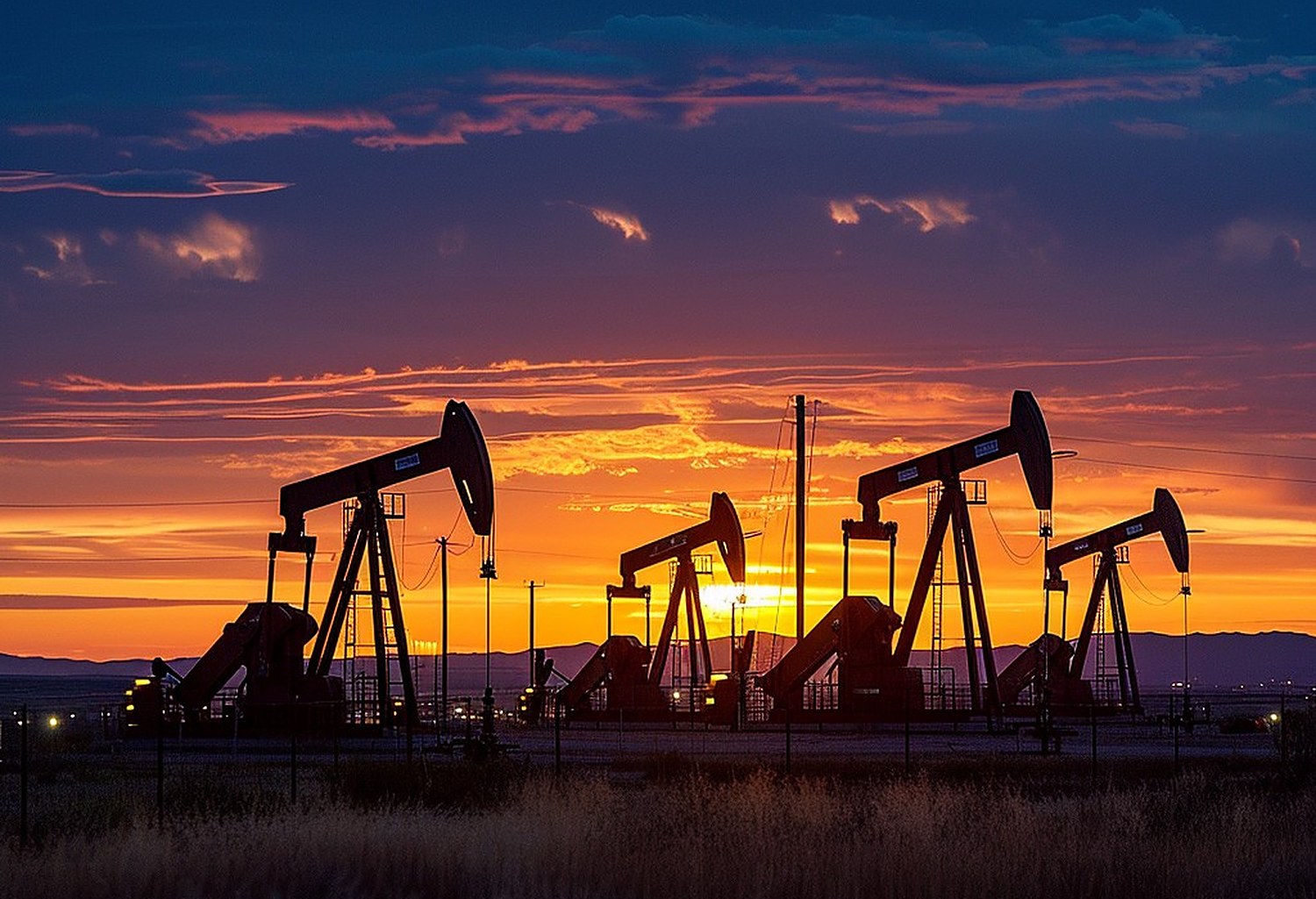
【1】On the dry plains of West Texas, two industries are drilling into the same ground for opposite reasons.One lifts oil from the Permian Basin, bringing three to ten barrels of brine up with every barrel of crude; the other builds warehouses of servers that must stay cool where water is already scarce.
【2】A single large data centre can draw five million gallons a day for evaporative cooling, about what a town of twenty thousand uses.In September, as complaints mounted, Texas paused new data-centre permits and its attorney general opened an inquiry into how facilities spend water.
【3】The other side of the ledger is larger and less visible: the Permian produces some eight billion gallons of oilfield water a day.Most of it is trucked long distances and injected underground, a route that is costly, linked to earthquakes and, by some estimates, short of pore space by 2030.
【4】A team at the University of Texas at Austin, led by Vaibhav Bahadur, asked whether existing desalination plants could make that water clean enough to cool a server.Cooling water must carry fewer than five hundred parts per million of dissolved solids, and their answer, published in Water Research, is a qualified yes.They also built an index, Saline Water Utilisation Intensity, which bundles cooling technology, local salinity, the stress already on the regional aquifer and the fate of the leftover brine.
【5】The two ways of removing salt fail in opposite directions, and the choice between them sets most of the cost.Reverse osmosis pushes water through membranes cheaply but struggles once the water is saltier than the sea, whereas thermal plants boil the water off and condense the vapour, which handles extreme salinity at the price of fuel and a steady buildup of scale.Even the hungriest of those routes, the authors calculate, uses only a fraction of what a data centre spends on computing, which disposes of the usual objection while leaving the question of where the water comes from.
【6】Of three case studies, a proposed facility in Longview scored best, because brackish groundwater treated by two-stage reverse osmosis recovered most of the water at modest cost.That, not oilfield brine, is the least risky version of the idea, and the one a regulator can permit without an argument about liability.
【7】Money is the harder constraint: burying a barrel costs fifty to seventy-five cents, while treating it for use off the oilfield has been estimated at two dollars.The arithmetic only works if operators must count the cost of a well they can no longer use.
【8】Two things are missing from that sum, and the first is the salt itself, since desalination does not destroy it but concentrates it into a reject stream that still needs a home.The second is subtler: making oilfield water valuable gives operators a reason to keep producing it, an awkward gift to a state now asking how much extraction it should permit.
【9】None of this has been built, and the paper is a model rather than a working plant.What it establishes is where the argument now sits: the limit on AI's water use is less engineering than who pays for a disposal that has always been someone else's problem.
原文出处:本文据 Vishnu Sree Shanthanu Katakam, Vaibhav Bahadur 等《System-scale design and analysis of desalination systems for meeting water needs of data centers》,Water Research(2026-09 在线;The University of Texas at Austin,Cockrell School of Engineering 机械工程系 Walker 讲席、Jackson 地球科学学院经济地质局 COMPASS 研究联盟)改写整理;二叠纪产出水量、回注成本、朗维尤案例、SWUI 指标,以及得州暂停新许可与总检察长调查等,均引自该研究与 UT Austin 2026-10-08 新闻稿及公开报道,仅供学习使用。
三、长难句分析(三步拆解法)
One lifts oil from the Permian Basin, bringing three to ten barrels of brine up with every barrel of crude; the other builds warehouses of servers that must stay cool where water is already scarce.
主干:One lifts oil ...; the other builds warehouses ...(分号连接两个独立分句,One 与 the other 前后呼应,构成"两个行业"的对举)
省略:One 与 the other 后都省略了 industry,靠上文 two industries 补足,是英语对比句的常见省笔
现在分词作状语:bringing three to ten barrels of brine up(伴随状语,说明"抽油"这个动作同时带出什么;bring sth up 的宾语被后置,up 是副词)
定语从句:servers that must stay cool where water is already scarce(that 指 servers;where=in which 引导定语从句修饰前面的地点含义,already 暗示矛盾早已存在)
考点:分号连接并列句;One ... the other ... 对举;分词作伴随状语;关系副词 where;量词搭配 three to ten barrels of
Most of it is trucked long distances and injected underground, a route that is costly, linked to earthquakes and, by some estimates, short of pore space by 2030.
主干:Most of it is trucked ... and injected ...(两个并列的被动谓语;主语 Most of it 指上文每天八十亿加仑油田水)
同位语:a route(名词短语作同位语,把前面"运输+回注"整体命名为"一条路线")
定语从句三连:that is costly, (is) linked to earthquakes and ... (is) short of pore space(一个 that 引出三个并列谓语,后两个承前省略 is,从"贵"到"危险"到"没地方",层层加码)
插入语:by some estimates("据一些估算",把"2030 年用完"明确标为估算而非定论,学术写作的谨慎标志)
Reverse osmosis pushes water through membranes cheaply but struggles once the water is saltier than the sea, whereas thermal plants boil the water off and condense the vapour, which handles extreme salinity at the price of fuel and a steady buildup of scale.
主干:Reverse osmosis pushes ... but struggles ..., whereas thermal plants boil ... and condense ...(whereas 引出对比分句,两边各带一个转折或并列)
时间状语从句:once the water is saltier than the sea(once 在此不表"一次",而是"一旦",等于 as soon as)
Two things are missing from that sum, and the first is the salt itself, since desalination does not destroy it but concentrates it into a reject stream that still needs a home.
主干:Two things are missing from that sum(主系表;sum 在此不是抽象的"总和",而是上文那笔"成本账")
并列分句:and the first is the salt itself(the first 指代 two things 中的第一件,下段用 the second 收尾,形成清单式结构)
原因状语从句:since desalination does not destroy it but concentrates it ...(since 表原因;not ... but ... 构成"不是消灭、而是浓缩"的对照)
定语从句:a reject stream that still needs a home(that 指 reject stream;needs a home 是拟人化说法,意为"仍要有去处")
考点:not ... but ... 结构;since 引导原因;代词 it 的两次指代(都指 salt);抽象名词的具体化
What it establishes is where the argument now sits: the limit on AI's water use is less engineering than who pays for a disposal that has always been someone else's problem.
主干:What it establishes is where the argument now sits(what 主语从句+be+where 表语从句,是本站在结论段常用的"判断句"骨架)
1. Which of the following best states the main idea of the passage?
A. Oilfield wastewater can now be turned into drinking water at a cost lower than underground disposal.
B. Treating oilfield wastewater for data-centre cooling is technically feasible, but its fate depends on cost and on how the leftover waste is finally accounted for.
C. Data centres should be banned in dry regions until they stop using freshwater for cooling.
D. Thermal desalination is the most promising solution because it can handle water of any salinity.
2. The word "scale" in paragraph 5 ("a steady buildup of scale") is closest in meaning to ______.
A. size or extent B. a measuring instrument C. a hard mineral deposit D. a range of levels
仿写题:仿照第 9 段 "What it establishes is where the argument now sits: the limit on AI's water use is less engineering than who pays for a disposal that has always been someone else's problem."(先用 "What it establishes is where the argument now sits:" 定位争论,再用 less A than B 把焦点从技术转向责任),就"校园里手机该不该禁"这个话题写一句你自己的判断句,要求 A、B 两项一个是技术/规则,一个是责任/习惯。